Many childcare organisations are still dealing with significant staff shortages. They are therefore looking for new ways to find people, for example through career-switch programmes. Some organisations go one step further and look beyond national borders.
For example, Childcare Wij zijn JONG is recruiting early childhood professionals from abroad. Soon, eleven new employees from Spain, Portugal and Greece will start.

Recruiting workers from abroad happens in many sectors. But for a childcare organisation to choose this approach is fairly new. Understandably, it can sound complex and raises questions. Is their diploma recognised in the Netherlands? What about housing? And do they meet the mandatory language requirement?
Greece, Spain and Portugal
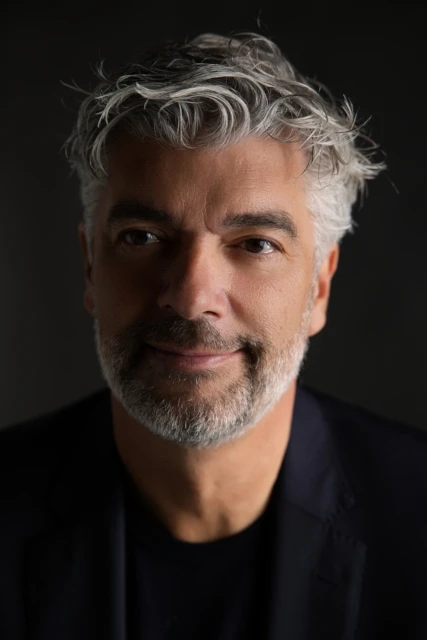
Manuel Diez is the founder of Temporales, an organisation that recruits employees from other countries. He explains: “On behalf of Wij zijn JONG, we started recruiting staff from abroad with our Caretalent label in January 2025.
Candidates from Greece, Spain and Portugal followed an intensive programme, including learning Dutch. This has paid off. Soon they will begin their first working week of twenty hours at an after-school care (BSO).”
From warm Madrid to breezy Eindhoven
Manuel is happy to explain how the process works. “We only select people who really plan to emigrate to the Netherlands and do not see this as something for a few years. We filter out the adventurers and check whether professionals understand what it means to swap warm Madrid for a breezy Eindhoven.”
According to Manuel, the required diploma is also carefully checked. “DUO assesses whether their foreign qualification meets the requirements to work here as an early childhood professional.”
Selected for language aptitude
Then comes the difficult part: learning Dutch. “Speaking the language is crucial,” Manuel says. “To work with children, you must meet the 3F requirement. That’s why we run several tests to determine whether someone has the right aptitude. No talent for languages? Then you cannot take part.”
Back to school
What follows is an intensive programme where selected professionals first learn Dutch in their own country and then come to the Netherlands. “Once in the Netherlands, they go back to school full-time from nine to five for five to six months. It’s a demanding method to master the language.”
That is why selection is strict, Manuel explains. “This helps prevent dropouts. The curriculum is structured so that professionals develop language skills while also learning how Dutch childcare works — including laws and regulations, safety and pedagogical guidelines. That can differ quite a lot from what they are used to.”
Starting in after-school care (BSO)
If everything goes well, they reach language level 2F after five to six months. Not yet enough for daycare. “Correct,” says Manuel. “But sufficient to start in after-school care. That’s why these eleven recruited professionals will already start soon.”
And what do they do alongside those twenty hours at the BSO? “Continue Dutch lessons,” Manuel says. “If all goes well, they reach 3F in September. From that point, they can work 36 hours in daycare.”
Allowance
When you study full-time from nine to five, there is little room to earn money. That’s why these future professionals receive a fully funded programme and, according to Manuel, an allowance.
“This is roughly equal to what someone earns in Southern Europe. Once they start working, the allowance stops and they are paid according to the CAO. If they already have several years of experience in Portugal, for example, that can be reflected in their salary scale.”
Repaying study costs
What if students drop out halfway through the programme? Manuel: “We try to prevent that with selection, but it can happen. If it turns out a student cannot handle the level or the language, the programme ends. In that case, the student does not have to repay the study costs.”
And what if they are already working but it doesn’t suit them? Can they still return? “Always in consultation with the employer. We assess whether someone fits better at a different location or in a different context. Before people start, we also pay attention to this: they meet the manager and colleagues.
But if someone really wants to stop and leaves the organisation, study costs must be repaid. If the student switches to a different employer, it can be explored whether those costs can (partly) be recovered from the new employer.”
Finding housing
What about housing? Homes are not easy to find in the Netherlands — can these people find their own place? “During the first year, housing is fully arranged for them. At the moment, all students live together in a beautiful building in Haarlem.
After the first year, we encourage them to move on to independent housing. That can indeed be difficult if you’re searching alone. That’s why students often rent together, which is usually easier. And if you are willing to live outside the Randstad, it becomes a bit easier as well.”
Settling in the Netherlands
Manuel has extensive experience with people coming to the Netherlands to work. “Not only in childcare, but also in healthcare. Language or housing is often not the biggest obstacle.
The real question is whether people can truly settle here. That’s why we do everything we can to make them feel at home. If someone was part of a chess club in their home country, we look for a chess club in their new town. We take good care of these people and don’t just leave them to figure it out alone.”